
Logan Criminal History Checks
A sound Logan search begins with the event, not just a name. A city street report normally starts with Logan Police. An event on Utah State University property may belong to USU Police even though the place has a Logan address. An arrest can then create a separate Cache County Jail record. If a prosecutor files a case, Utah Courts becomes the source for the docket and outcome. BCI is a fourth channel, but its Right of Access product is for a person reviewing their own fingerprint-linked Utah history.
Use the following order to keep the records distinct and reduce false matches:
- Identify Logan Police, USU Police, Cache Sheriff, or another agency from the citation, report number, or event location.
- Ask that agency for the incident or arrest report through its official records route, describing the date, place, people, and desired record type.
- Call Cache County Jail at 435-755-1227 for current or recent custody while its online list remains unavailable.
- Search Utah Courts Xchange under both District and Justice jurisdictions when the offense level is not clear.
- For a personal statewide repository copy, follow Utah BCI Right of Access with fingerprints and photo identification.
The broader Cache County criminal history overview explains how those county and state layers differ. Logan readers should return to the city custodian for the local report itself.
Logan Police Records Start Point
Logan Police and public-safety offices are associated with 290 North 100 West. Police-created reports should go through the official city police GRAMA route, not through the Cache County Sheriff's form. The city and its police department do not hold every record tied to an event. A police narrative can describe an officer's response, evidence, and arrest facts, but it cannot replace a booking file or later court order.
The official Logan Police source provides a view of the department used for local access.
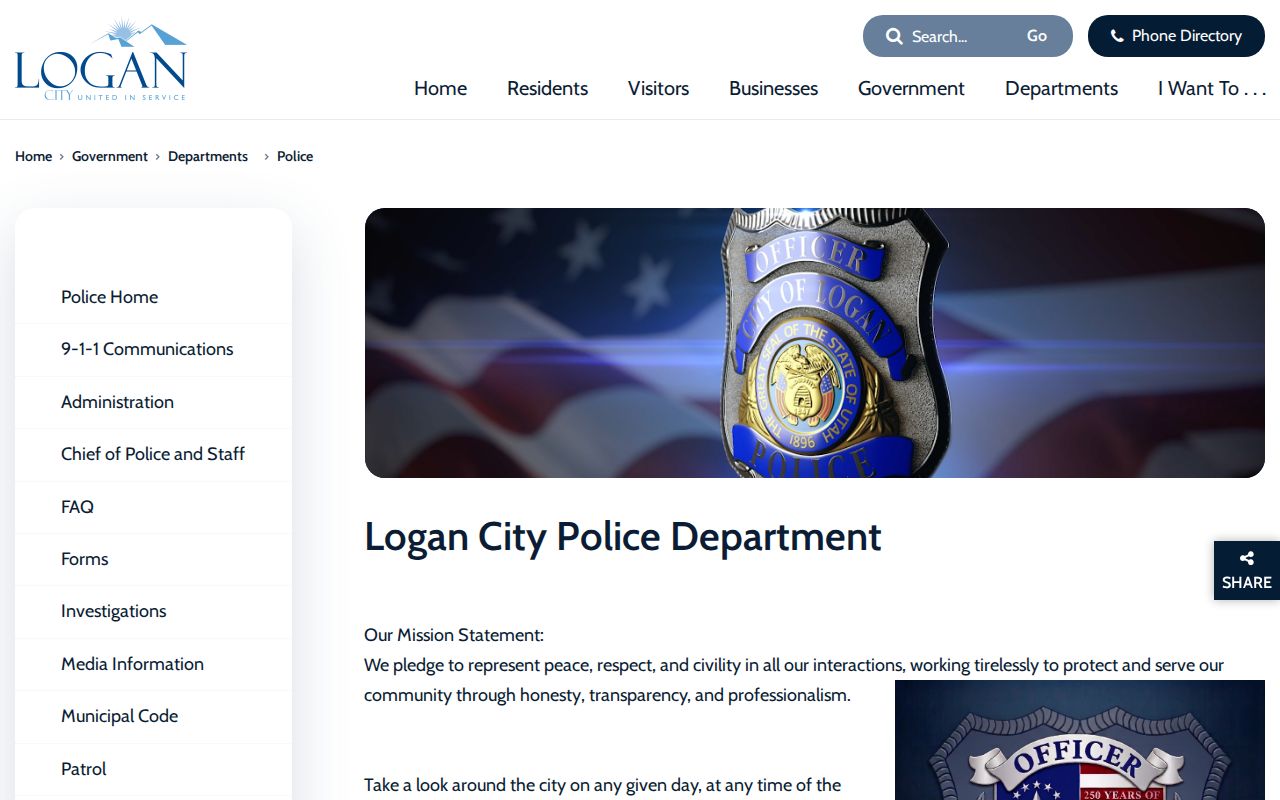
This city source is the right place to confirm the current request channel before sending a Logan police-record request. The research did not verify a stable direct records phone, email, form field list, or fee. Those details must be checked live rather than guessed. No official Logan Police mobile app was verified, so scanner and social apps are not substitutes.
Records at the Logan Police Department
Logan Police holds reports it creates for incidents within its jurisdiction. A useful request names the event date and place, involved person, report or citation number if known, and the exact product sought. A report, CAD entry, 911 material, and video are separate record series. Asking for one does not ensure the others are included. Active material and private or protected portions can be withheld or redacted under GRAMA.
General Logan city records and Logan police records follow different internal custody paths. Send a Logan event request to the Logan police route, and use a Logan city records officer for unrelated municipal material. If access to private Logan material rests on being the subject or an authorized representative, include identification and the proof the Logan records officer requests. Ask for a written classification and appeal information if part of the Logan record is denied.
Logan Police records show the city's account of an event. They do not establish that a prosecutor filed the same arrest charge, or that a court entered a conviction.
Logan Campus Record Boundaries
Utah State University makes Logan unusually easy to search through the wrong police office. USU Police is a distinct agency. A campus event can produce a USU report even when booking and court work occur elsewhere in Logan. The agency name shown on a citation, Xchange defendant information, or jail confirmation should control the request. A Logan mailing address alone does not prove Logan Police is custodian.
This Logan division also matters when reading Logan crime totals. A BCI dashboard export filtered to Logan Police measures that agency's submissions. It does not automatically include USU Police or Cache Sheriff work within a broadly understood Logan area. Save the Logan agency, year, offense definition, and extraction date with any number. The 2021 NIBRS reporting transition also breaks a simple Logan before-and-after trend.
USU Police is the verified local fingerprint appointment route while the county jail machine is out of order. Call 435-797-1939 and use the university public-safety appointment process. Fingerprinting starts a separate BCI task; it does not order a Logan Police report.
Booking and Arrest Records in Logan
Logan does not have a separately documented long-term city jail. A person arrested by Logan Police is ordinarily routed to Cache County Jail at 1225 West Valley View. The Logan police report and Logan booking record then answer different questions. The Logan report covers the alleged event and Logan officer action. The jail record covers Logan intake, initial charges, bond or hold information, custody status, and release or transfer.
The Cache County online current-inmate and 30-day booking tools were unavailable when the research was completed. Call 435-755-1227 instead of treating an empty or failed page as proof that no Logan booking exists. A formal jail record request goes through Cache Sheriff's Records Department, while the city incident report remains with Logan Police. The official Logan city homepage also gives useful context for the municipal source.
The Logan city government source shows the municipal setting in which city records are maintained.
The image helps distinguish Logan's city government from Cache County's jail and state court offices. For more booking detail, use the county Arrest Search page.
Logan Court Record Split
Logan Justice Court handles most class B and C misdemeanors, city ordinance violations, infractions, and traffic matters in its jurisdiction. Its published phone is 435-716-9540. First District Court handles felonies and class A misdemeanors. Both kinds of cases can appear through Xchange, so choosing both District and Justice is safer when the offense level or filing court is not known.
| Logan route | Typical record | Best check |
|---|---|---|
| Logan Justice Court | Lower misdemeanors, ordinances, infractions, traffic | Xchange Justice jurisdiction or court inquiry |
| First District Court | Felonies and class A misdemeanors | Xchange District jurisdiction or 435-750-1300 |
| Police or campus agency | Incident and arrest narrative | Agency GRAMA request |
Case and citation numbers are not unique across the whole state. Add Logan or Cache scope and use a date of birth when it is lawfully available. The court docket, not an arrest line, supplies filed charges, proceedings, judgment, and disposition.
The Logan Municipal Court File
Utah calls Logan's local court a justice court. Its file follows the case from citation or complaint through hearings and disposition. Xchange can show public CORIS summary data as court staff enter it. A free public Xchange terminal is available at most district courthouses, while remote guest access starts with credit and charges per search and document.
| Court Name | Logan Justice Court for city lower-level matters; First District Court for felony and class A matters |
|---|---|
| Case Types Heard | Most class B and C misdemeanors, ordinances, infractions, traffic, plus higher cases at First District |
| Case Lookup Channel | Utah Courts Xchange, court telephone or counter, and Request for Court Record when material is not online |
| What the Docket Shows | Case number, parties, filed charges, hearings, entries, judgment, financial account, and disposition when public |
| Copies & Fees | Xchange begins with $10 credit, charges $0.35 per search, and charges $1 for an available document |
The First District public defender source was also captured for Logan's local court ecosystem.
That office is part of the case system, but Utah Courts remains custodian of the court file. Sealed, expunged, juvenile, and other nonpublic matters do not appear as ordinary public Xchange results.
Logan Record Offices Differ
Three downtown buildings can confuse a Logan records trip. First District Court at 135 North 100 West is the state court-record stop. The Historic Courthouse at 199 North Main houses the Cache County Attorney, not the district court clerk. The County Administration Building at 179 North Main houses county offices, but it is not the keeper of Utah district criminal case files.
At First District Court, security rules bar bags, cameras and recorders, food and drink, powders, vape devices, and potential weapons. Phones must be off in courtrooms. Call 435-750-1300 before a trip for an archived file, terminal access, an interpreter, or accessibility needs. The sheriff records counter is a separate stop at Valley View and closes at 4:30 p.m.
The official Census Logan profile provides the city source used for its population baseline.
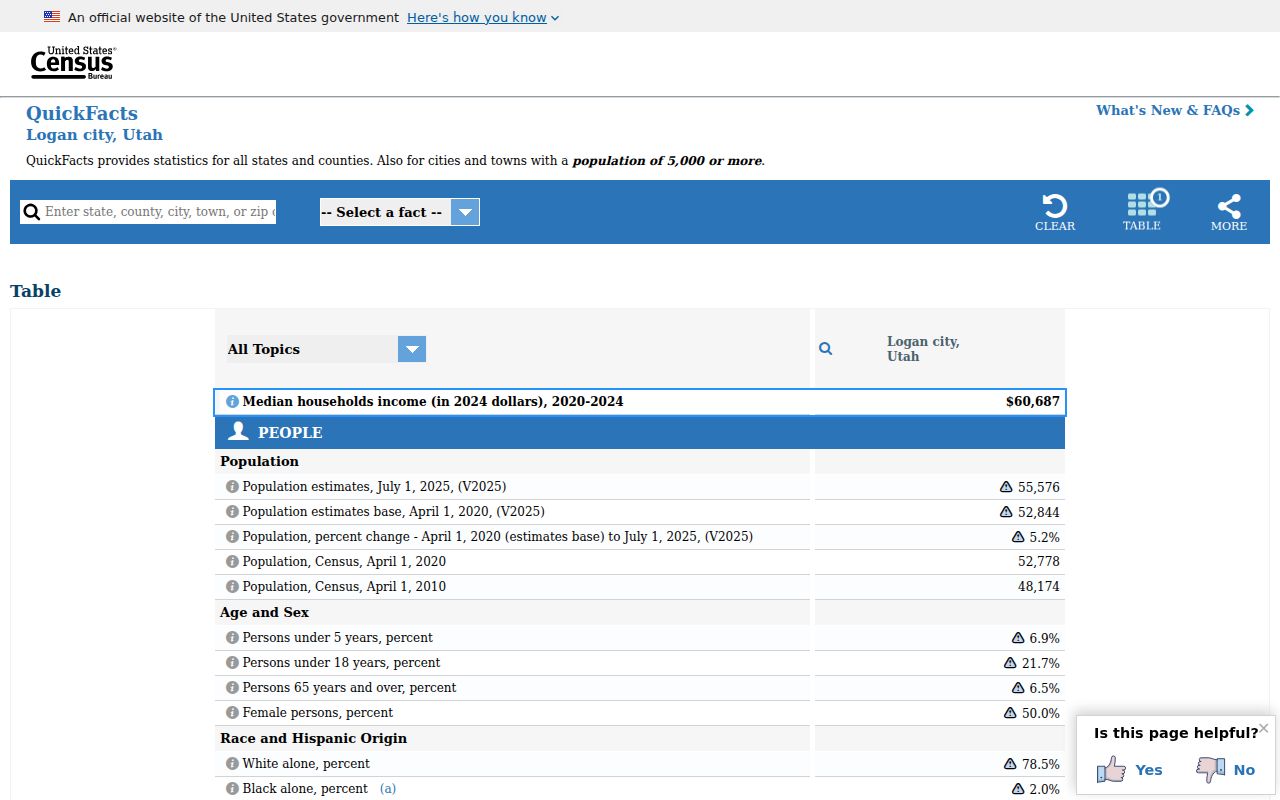
Logan had 52,778 residents in the 2020 Census, while the official Utah comparison reached 56,857 for 2025. That growth reinforces why agency and venue filters matter more than an unscoped name query.
How Logan Records Reach the County
A Logan arrest can produce several Logan records in sequence. The Logan city or campus agency creates its report. Cache County Jail creates the Logan booking record. A prosecutor decides what to file, and the proper Utah court creates a Logan case. Courts then report Logan dispositions through state systems. A BCI record depends on fingerprint matching and reported events, so it is not identical to the Logan public court index.
Record flow: Logan Police or USU Police › Cache County Jail and courts › Utah Department of Public Safety, Bureau of Criminal Identification
For a very recent event, start with the police custodian and jail phone. For a filed charge or final outcome, use the current docket. For an older personal Utah repository history, use BCI Right of Access. An arrest charge, filed charge, and final disposition may differ, and the chronology explains why.
Logan Xchange Search Fields
Xchange works best when the Logan court route is narrowed before each billable search. Select District, Justice, or both. Use All Cases rather than Judgments Only for broad case research, then set Cache County or a Logan court scope. A name plus date of birth helps separate people who share a name. Logan district CORIS coverage is complete for cases filed since August 18, 1997, though converted older records may be sparse.
| Field | Use for Logan | Caution |
|---|---|---|
| Jurisdiction | District, Justice, or both | Pick both when offense level is unclear |
| Search scope | Cache County or Logan court | A statewide search can return too many names |
| Name and DOB | Match the likely defendant | A name alone is not identity proof |
| Case or citation number | Locate a known matter | Neither number is statewide unique |
| Date range | Narrow filing or event time | Violation and filing dates may differ |
A Logan result may show the court location, case type, filing date, party code, and a Case History/Documents link. Read the Logan court location rather than assuming every Logan city incident stayed in Logan Justice Court.
Reading Logan Criminal Records
A Logan city report is event centered. It may list the Logan reporting officer, allegations, involved people, evidence, and an arrest. A Logan booking file is custody centered. It records Logan intake, the arresting agency, initial charge labels, bond or hold, and release. A Logan court file is case centered and can contain a charging document, hearings, minute entries, orders, judgment, accounts, and disposition.
Those records should be matched by event date, agency, case or citation number, and public date of birth where appropriate. Do not treat a same-name hit as proof. A dismissal does not make the earlier booking vanish, and a booking does not prove guilt. If a public Logan record appears wrong, contact the office that created it. A court correction belongs with Utah Courts; a police report issue begins with its police custodian; a fingerprint repository challenge goes through BCI.
Note: Official press posts may locate a recent event, but the report and court disposition remain the authoritative Logan records.
Logan Record Access Rules
Utah GRAMA governs access to Logan Police and other city records, while court files follow Utah Judicial Council rules. A written GRAMA request should identify the requester and describe the record with reasonable detail. Public access does not remove privacy rules. Active investigations, protected victim or minor information, personal identifiers, and controlled or private material may be withheld or redacted.
Key Statutes:
Utah Code §63G-2-201 gives access to public records subject to lawful classifications.
Utah Code §63G-2-204 sets request content and ordinary response rules.
Judicial Administration Rule 4-202.02 classifies court records and limits public access to protected case material.
Ordinary GRAMA handling is generally as soon as reasonably possible and no later than ten business days, but that is not a promise of full release. Ask for segregated public portions and a written basis for any denial. Under §63G-2-401, an initial appeal generally goes to the chief administrative officer within 30 days.